Column · @claytonwisp989
Caribbean Food Centennial: The Ultimate Celebration of Caribbean Culinary Heritage
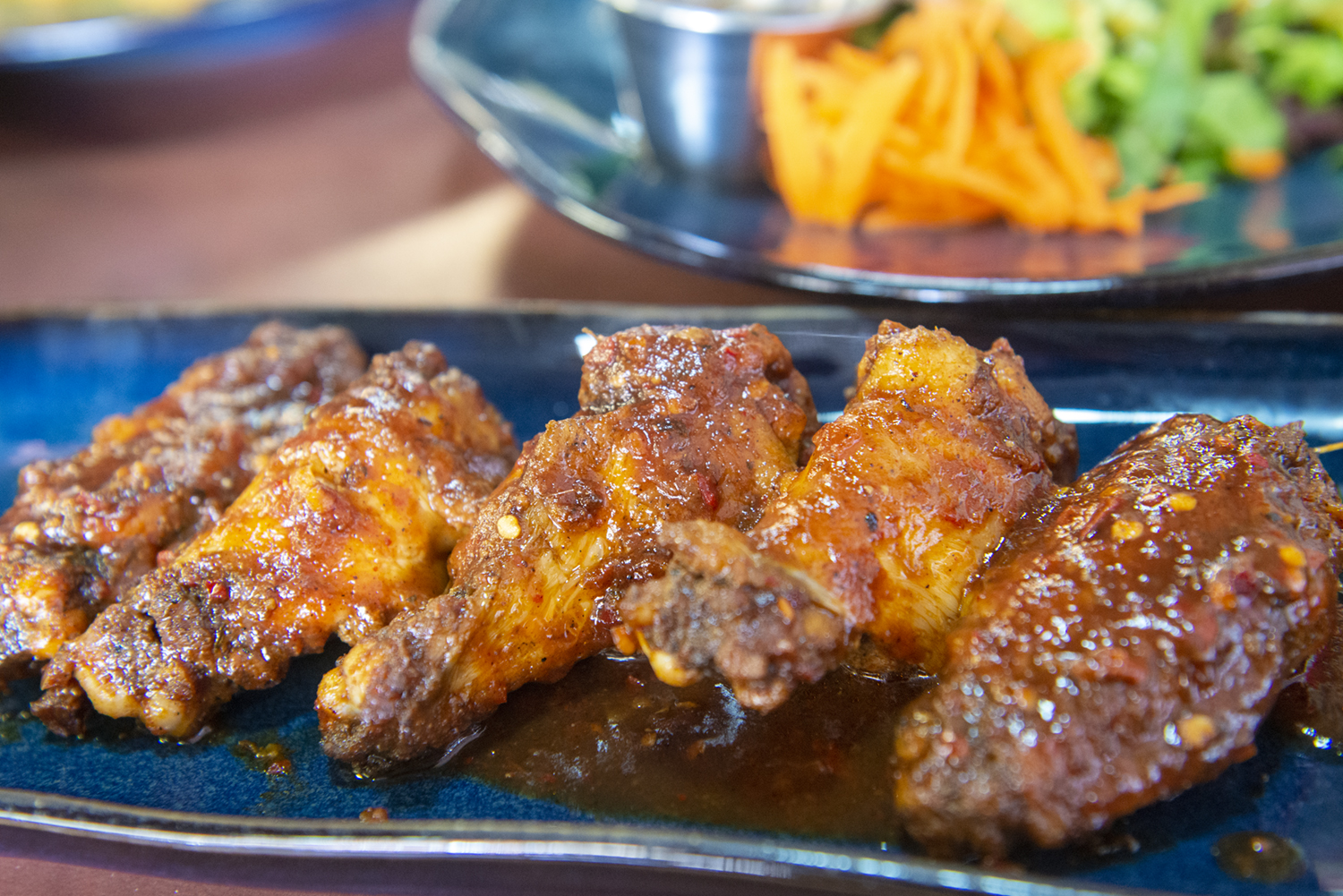

A centennial invites a particular kind of attention. It asks people not only to celebrate, but to measure what has endured, what has changed, and what still deserves protection. In the case of Caribbean food, a hundred-year frame feels both useful and slightly too small. The region’s culinary heritage stretches far beyond a century, rooted in Indigenous knowledge, shaped by African survival and creativity, layered with European colonial influence, and enriched by Indian, Chinese, Lebanese, and other migrant traditions that became inseparable from local life. Still, the idea of a Caribbean food centennial offers a compelling lens. It gives us a way to honor the dishes, cooks, vendors, farmers, fishers, bakers, and home kitchens that carried this food through war, migration, tourism booms, hurricanes, and changing tastes.
What makes Caribbean cuisine so powerful is that it has never been static. It is a living archive. You taste history in pepperpot, jerk pork, sancocho, cou-cou, doubles, saltfish rundown, callaloo, roti, patties, black cake, cassava bread, and conch fritters. You also taste adaptation. A recipe shifts because a grandmother moved islands. A sauce grows hotter because local peppers are stronger that year. A rice dish changes because imported staples get expensive and cooks turn back toward breadfruit, yam, green banana, pigeon peas, and cassava. That dynamism is part of the heritage, not a departure from it.
The phrase “caribbean food centennial” might sound ceremonial at first, but the strongest celebrations are practical. They protect recipes that were never written down. They support growers who keep old varieties alive. They fund culinary education. They create room for younger chefs to reinterpret classics without stripping them of context. If the centennial means anything, it should mean recognizing food as culture, labor, economy, memory, and identity all at once.
A cuisine born from movement, pressure, and ingenuity
No serious conversation about Caribbean food can ignore the conditions under which much of it developed. This is food shaped by displacement and unequal power, but also by astonishing resilience. Enslaved Africans carried agricultural knowledge, seasoning methods, stewing traditions, rice cultivation techniques, and an instinct for using every edible part of a plant or animal. Indigenous peoples contributed cassava processing, pepper use, smoking methods, and local botanical knowledge that remains foundational. European colonizers imposed plantation systems and introduced livestock, wheat, citrus, and other ingredients. Later indentured laborers from India brought curries, chutneys, caribbean food centennial caribbean food centennial cumin, coriander, and flatbreads that transformed islands like Trinidad and Guyana. Chinese migrants left their mark on stir-frying, noodle culture, soy-based seasoning, and small-shop foodways. The result is not confusion. It is a coherent, regionally distinct culinary world.
Spend enough time eating across the Caribbean and a pattern emerges. Many dishes begin with a flavor base built from herbs, onions, scallions, garlic, thyme, celery, peppers, and citrus. Marinades matter. Time matters. The pot matters. Smoke matters. Even where ingredients overlap, technique creates local identity. Jamaican jerk is not merely spiced grilled meat. Its history is tied to Maroon cooking traditions, pimento wood, allspice, Scotch bonnet, and methods developed for both flavor and concealment. Trinidadian doubles are not simply chickpeas in fried bread. Their beauty lies in the balance of bara texture, curried channa, pepper sauce, tamarind, cucumber, and timing. A good doubles vendor knows that seconds change everything.
That last point matters more than people sometimes admit. Caribbean food is often discussed in broad, colorful terms, but excellence is exacting. Fry oil must be hot enough to puff dough without greasing it. Plantains should be sweet but not collapsing. Rice and peas should remain distinct, not mushy. Goat curry has to hold spice depth without turning muddy. Sorrel should taste bright, not flat. The best cooks in the region are intuitive, yes, but they are also disciplined. They know how long cassava needs, when coconut milk should go in, how much acid a stew can take before it loses roundness, and why reheated soup on day two often tastes better than it did on day one.
The centennial as a celebration of people, not only plates
It is tempting to mark a culinary milestone by showcasing the most photogenic foods. There is nothing wrong with that, but a true Caribbean food centennial should widen the frame. The region’s food story belongs as much to market women and roadside grill masters as it does to restaurants. It belongs to the woman who wakes before dawn to peel provisions for soup. It belongs to the baker who has judged oven heat by hand for thirty years. It belongs to the fisherman who can tell, from one look at the morning catch, which species will sell fresh and which should be stewed or curried. Heritage survives through repetition, but repetition requires people.
In many islands, some of the most important culinary knowledge still moves orally. Measurements are described as a “handful,” a “little bit,” or “until it smell right.” That can frustrate outsiders who want a recipe to behave like engineering. Yet there is rigor in this language. It accounts for weather, ingredient variability, and the personality of produce. A bunch of thyme from one hillside may be more pungent than another. Scotch bonnets can swing wildly in heat. Coconut milk from fresh grating behaves differently from canned. Good cooks adjust without fuss because they are trained by attention.
One of the challenges of any centennial celebration is deciding what to preserve. Not every old method can survive unchanged. Charcoal fires become less practical in urban areas. Traditional fishing stocks are under pressure. Imported convenience products replace labor-intensive preparation. At the same time, it would be a mistake to romanticize hardship. Few seasoned cooks would argue that every task was better when it took twice as long. The better question is what core knowledge must remain intact even as tools evolve. Fresh seasoning blends can be made in a blender rather than a mortar, but their balance should still make sense. Bread can come from a modern deck oven, but the dough still needs proper fermentation. The soul of the food is not trapped in nostalgia, yet it can disappear if shortcuts override judgment.
Signature dishes carry regional identity
A centennial celebration works best when it acknowledges difference within the Caribbean. The region is linked by climate, colonial histories, trade patterns, and migration, but it is not monolithic. Too many discussions flatten Caribbean cuisine into generic “island food,” usually meaning sweet rum drinks and something grilled. The truth is far richer.
Jamaica offers jerk, ackee and saltfish, mannish water, festival, bammy, escovitch fish, and pepperpot soup, each tied to specific histories and local ingredients. Trinidad and Tobago has doubles, bake and shark, pelau, callaloo, curry crab and dumpling, and an extraordinary chutney and pepper sauce culture. Barbados is often associated with flying fish and cou-cou, pudding and souse, fish cakes, and rum-inflected desserts. Guyana brings pepperpot, cook-up rice, metemgee, seven curry traditions, and a layered Indo-Caribbean legacy. Haiti’s cuisine, among the most distinct in the region, offers griot, soup joumou, diri ak djon djon, pikliz, and patties with a spice profile all its own. Puerto Rico, the Dominican Republic, Cuba, the Bahamas, Grenada, Saint Lucia, Antigua and Barbuda, Dominica, Saint Vincent and the Grenadines, Suriname, and many others contribute equally strong culinary identities.
These are not museum pieces. They remain central to daily eating, Sunday gatherings, religious festivals, beach outings, funerals, carnival season, and Christmas tables. In practical terms, that means a centennial celebration should include ordinary foods as much as ceremonial ones. A flaky patty eaten from a paper bag, a bowl of pumpkin soup after rain, a piece of cassava pone from a roadside stall, or a breakfast of fried bakes and saltfish can say as much about culinary heritage as a formal tasting menu.
Why ingredients deserve as much praise as recipes
Recipes get the spotlight, but ingredients carry the deeper story. Anyone planning or writing about a Caribbean food centennial should spend time on the agricultural and ecological side of the equation. Caribbean cooking is inseparable from breadfruit, cassava, sweet potato, yam, dasheen, okra, pigeon peas, coconut, plantain, green banana, allspice, sorrel, callaloo bush, tamarind, ginger, citrus, and an astonishing range of peppers. Seafood matters enormously too, from snapper and kingfish to conch, crab, lobster, and salt cod, the last one a reminder that trade and scarcity often shape tradition as much as abundance does.
Take breadfruit as one example. It has fed generations, appears in everything from chips to oil-down to roasted street food, and deserves far more attention in modern menu development. It stores reasonably well, carries cultural memory, and can reduce dependence on imported starches in some contexts. Yet it also presents challenges. Younger cooks may know it mainly in fried form. Supply can be seasonal and uneven. Some consumers still misread local staples as “old-fashioned” compared with imported grains or processed foods. A centennial worth its name would tackle that tension directly and proudly.
The same goes for cassava. In some islands and mainland territories with strong Indigenous and Afro-Indigenous traditions, cassava is not simply another starch. It is a civilizational ingredient. Processing bitter cassava safely requires technique. Baking cassava bread well requires experience. Turning cassava into pone, farine, or other preparations involves a chain of skills that should be documented and taught, not assumed to survive on goodwill alone.
The role of migration in shaping the modern Caribbean table
No Caribbean cuisine stayed inside island borders. Migration has carried these foods into London, Toronto, New York, Miami, Amsterdam, and far beyond. Diaspora communities preserved dishes, adapted them, and sometimes changed them in ways that later traveled back. That circulation is part of the heritage now.
Walk into a Caribbean bakery in Brooklyn or Brixton and you see how memory gets translated into commerce. Patties may be larger than what some people grew up with. Pepper sauces may be bottled for wider sale. Goat may be sourced differently. Seasonal fruit may arrive frozen rather than fresh. Yet these places are not diluted copies of home. They are active cultural sites. People argue about the right crust on a patty, the right level of browning on stew chicken, the right sweetness in black cake, because the food still matters deeply.
There is a practical lesson here for any caribbean food centennial initiative. Heritage work must include the diaspora. Some of the most determined documentation efforts, cookbook projects, oral histories, and preservation campaigns come from people living outside the region who understand exactly what migration can erase if no one is intentional. At the same time, diaspora interpretations should not drown out island-based realities. A recipe developed in Toronto during winter, using what was available, deserves respect, but it is not the only benchmark. The strongest celebrations allow those versions to speak to one another.
Restaurants matter, but home cooking remains the standard
Professional kitchens have helped elevate Caribbean cuisine on the global stage. More chefs are treating regional dishes with the seriousness they deserve, and diners are finally seeing Caribbean food presented as something more than casual takeaway. That progress matters. Fine dining, food media, and culinary tourism can all widen appreciation and create economic opportunity.
Still, anyone with long experience around Caribbean food knows that the home remains the primary testing ground. Restaurant food can be excellent, but home cooks often hold the line on what a dish should taste like. They know when a chef has overcomplicated a recipe, underseasoned a stew, softened a spice profile for tourists, or turned a humble preparation into decoration. Some reinterpretation is healthy. Not every plate must be frozen in time. Yet innovation works best when it respects the architecture of the original dish.
A chef reviving breadfruit gnocchi with callaloo pesto might produce something memorable. A pastry cook can build a refined dessert around coconut, guava, and burnt sugar. A modern bar can use sorrel, tamarind, and bitters with intelligence. Those things can enrich the culinary conversation. But if the same kitchen cannot cook rice and peas properly or season a fish broth with authority, the project usually rings hollow.
What a meaningful centennial celebration could look like
The best tributes to culinary heritage are not purely symbolic. They create records, skills, income, and appetite for the future. If a region, city, institution, or food organization were planning a caribbean food centennial program, the most valuable work would likely combine celebration with preservation.
- Record oral histories from elder cooks, fishers, farmers, bakers, and market vendors before that knowledge disappears.
- Fund school and community cooking programs that teach local ingredients and classic techniques.
- Support seed saving, small farming, and ingredient research focused on traditional crops and resilient varieties.
- Build festivals around regional specificity, so each island or territory presents its own culinary voice rather than a generic Caribbean spread.
- Include diaspora chefs and writers, while keeping local custodians of tradition at the center.
That kind of framework avoids a common mistake. Too many food celebrations drift toward spectacle. You get music, branded cocktails, and a stage, but little remains after the crowd leaves. The stronger model leaves a paper trail, a video archive, trained young cooks, and stronger local supply chains.
The tension between authenticity and evolution
“Authentic” is one of the most overused words in food, and it can become a trap. Caribbean cuisine has always evolved. New ingredients entered, old ones disappeared, techniques adapted, and tastes shifted. A dish served in 1926 would not match one from 2026 in every detail, nor should it. Even so, not every change is equally thoughtful.
A useful way to judge evolution is to ask what function the change serves. If a cook swaps one pepper because a local variety is unavailable, that is adaptation. If a baker reduces spice in black cake slightly for a particular audience while keeping the fruit treatment and texture intact, that is a choice. If a restaurant removes the heat, acidity, seasoning depth, and textural character that define a dish simply to make it seem “approachable,” it often stops tasting Caribbean in any meaningful sense.
Experience helps here. The best cooks know what can bend and what should not. Soup can vary by household. A curry can move a little wetter or drier. Saltfish can be paired differently depending on region. But some structures hold. Soup joumou must remain generous and layered, not merely blended squash soup with a symbolic name. Pepperpot should carry the dark, slow complexity that makes it itself. Jerk without smoke, allspice presence, and serious heat may still be tasty, but it is missing its spine.
Tourism has helped and hurt, often at the same time
Tourism introduced countless travelers to Caribbean cuisine, and it has created livelihoods for restaurants, rum producers, street vendors, caterers, and food tour operators. It has also pushed some businesses toward a simplified version of the region’s food, heavy on sweet sauces and broad tropical clichés, light on nuance. This is not unique to the Caribbean, but the stakes feel sharper where so much cultural identity is condensed into a few menu categories.
A thoughtful centennial celebration can correct that. It can move beyond the usual resort buffet logic and present visitors with the full range of the cuisine, including foods that are less camera-friendly but more culturally central. It can highlight breakfast traditions, soups, ground provisions, pickles, porridges, offal dishes, seasonal drinks, and holiday foods. It can explain why a village fish fry tastes different from a hotel seafood grill, and why both can exist without pretending they are interchangeable.
Food tourism works best when it respects local rhythms. The best meals are often found not in polished spaces but in small establishments with tight menus and real confidence. A roadside stand that sells one stew and one starch exceptionally well can teach more about Caribbean food than a sprawling menu designed to please everyone.
The flavors that define memory
Ask people from the Caribbean what food they miss most, and their answers often reveal not only dishes but sensory details. The smell of thyme hitting hot oil. The faint bitterness of caramelized sugar in browning. Freshly grated coconut squeezing out first milk. Char from a drum pan. The sting of Scotch bonnet that arrives a second after sweetness. The deep scent of allspice and smoke from jerk on a roadside grill. Sorrel steeping with clove and ginger at Christmas. These details are not decorative. They are the architecture of memory.
That is why preservation cannot stop at ingredient lists. It must include texture, aroma, sequencing, and context. A recipe for curry goat that omits marination time, onion quantity, heat management, and the point at which the oil starts to separate from the sauce is not a working record. A recipe for cassava pone that gives temperature but not the expected density or sweetness profile leaves too much unsaid. Expert cooks often carry these cues in their bodies. Writing them down well is painstaking work, but it is necessary.
Building the next hundred years
The next century of Caribbean food will be shaped by climate pressure, migration, health concerns, and the economics of imported food. That may sound heavy for a celebration, but facing reality is part of honoring heritage honestly. More intense storms can devastate crops. Overfishing can thin out species once considered ordinary. Cheap processed imports can displace local staples. Younger generations may admire traditional food yet lack time to prepare it regularly. Every one of those pressures is real.
The good news is that Caribbean culinary culture has always shown unusual adaptability. There is room for smarter farming, renewed interest in local starches, stronger culinary training, better archiving, and more serious investment in regional food businesses. There is also room for pride without defensiveness. Caribbean cuisine does not need to imitate anyone. It needs infrastructure, documentation, and institutions equal to the excellence it already possesses.
For cooks, educators, and cultural organizers, a useful centennial mindset might look like this:
- Protect foundational knowledge, especially techniques tied to local crops and older generations.
- Make regional food economically viable for producers, vendors, and young culinary workers.
- Encourage innovation that understands history rather than borrowing surface aesthetics.
- Teach children that local ingredients are not backward, but sophisticated and deeply relevant.
- Document the everyday meal with the same care given to festival dishes and restaurant plates.
That is the work that turns celebration into legacy.
More than nostalgia, less than myth
Caribbean culinary heritage deserves admiration, but not mythmaking. Not every old recipe was perfect. Not every family version should be universal law. Some traditions faded for reasons that were practical, economic, or humane. Yet what remains is extraordinary. It is one of the world’s most layered food cultures, forged under pressure and carried forward by people with a fierce understanding of flavor, hospitality, and resourcefulness.
The real achievement of a Caribbean food centennial would be to show that this cuisine is both ancient in memory and immediate in daily life. It lives in cassava fields and city bakeries, in market baskets and Michelin-adjacent tasting menus, in Christmas fruit soaking under rum and in weekday pots of rice cooking before work. It belongs to the grandmother who never wrote anything down and to the young chef trying to source better local produce. It belongs to the islands and to the diaspora, to ceremony and to hunger, to history and to tomorrow.
If the celebration is done well, people will leave with more than appetite. They will understand that Caribbean food is not a trend, not a vacation fantasy, and not a single style. It is a record of survival and invention, expressed through heat, smoke, starch, herbs, sweetness, bitterness, and patience. A centennial worthy of the name would not simply applaud that heritage. It would feed it, teach it, and make sure it stays unmistakably alive.
Reggae Pot Jamaican Grill
Address: 7562 S University Blvd Unit C, Centennial, CO 80122
Phone: (303) 997-5623
FAQ About caribbean food centennial
What Jamaican dishes can I try in Centennial?
Reggae Pot Jamaican Grill serves Jamaican specialties such as jerk chicken, stewed oxtail, curry goat, and ackee and saltfish. Check the current menu for availability.
What is ackee and saltfish?
It is Jamaica’s national dish. The restaurant prepares ackee with salted cod, onions, thyme, tomatoes, garlic, black pepper, and pimento.
Can I order Jamaican food for pickup in Centennial?
Yes. Choose the Centennial location at 7562 S University Blvd Unit C when placing a takeout order.